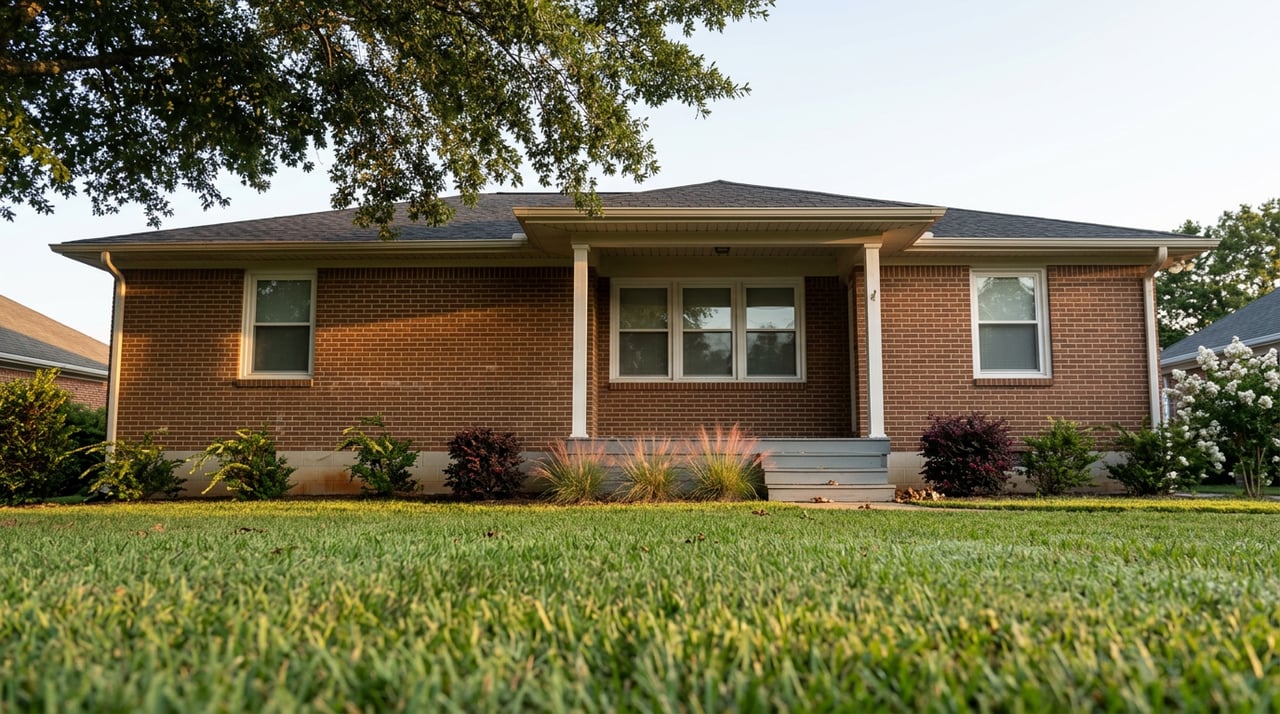
If you've been watching Hampton Roads real estate news this year, you've probably heard that Virginia lawmakers passed a bill protecting homeowners from insurance companies that cancel policies over roof age alone. It's real, it's good news for a lot of older housing stock in this region, and it will not help a single buyer or seller in Larchmont/Edgewater with the problem that actually derails deals here: what's behind the walls, not what's over the attic.
The law is House Bill 677 and Senate Bill 402. Once it takes effect on January 1, 2027, insurers won't be able to cancel or refuse to renew a homeowners policy solely because a roof has reached a certain age, as long as the roof passes inspection by an authorized inspector. That's a meaningful shift for a city full of 1920s and 1930s homes. But read the language again: it covers roofs. It says nothing about wiring, and Larchmont/Edgewater's electrical systems are the older, more fragile, more insurance-relevant problem most buyers never think to ask about until it's too late.
What the Law Actually Changes, and When
Two things worth sitting with before you get excited about this law solving your insurance headaches:
First, it isn't in effect yet. Today's date is well before January 1, 2027, so any policy issued or renewed between now and then is still governed by the old rules, where a carrier can decline or nonrenew a policy over roof age with 30 days' written notice, full stop.
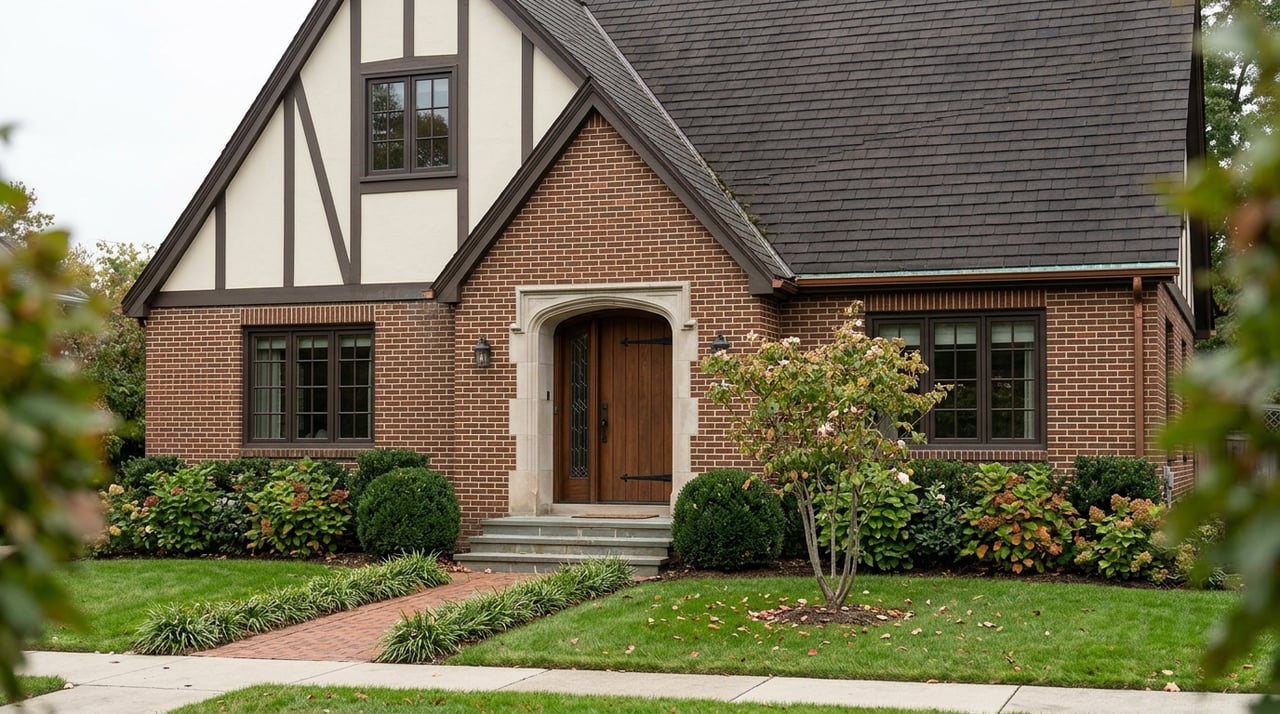
Second, even after it takes effect, it only touches one component of the house. Larchmont/Edgewater's housing stock, developed in the early twentieth century according to the neighborhood's own civic league history, was built during the exact window when knob-and-tube wiring was the standard method of electrifying a home. That window runs roughly from the 1880s through the 1940s. A Colonial Revival on Magnolia Avenue or a Craftsman bungalow on Powhatan Avenue, both real streets in this neighborhood, sits squarely inside it.
Here's the split, plainly:
| Home system | Covered by the new roof-age law | Common insurer response today |
|---|---|---|
| Roof age alone | Yes, starting Jan. 1, 2027 | Currently can trigger nonrenewal with 30 days' notice |
| Knob-and-tube wiring | No | Decline, surcharge, or conditional coverage requiring replacement |
| Galvanized plumbing | No | Often flagged during underwriting, similar treatment to wiring |
Why This Hits Larchmont/Edgewater Harder Than a Newer Norfolk Neighborhood
Larchmont and Edgewater sit on land that was farmland until 1906, when a group of Norfolk businessmen bought roughly 200 acres and started laying out streets, sidewalks, and lots. By 1912, builders had sold 64 homes. The neighborhood was annexed into the City of Norfolk in 1923. Today it holds more than 2,300 homes, the dominant style being Colonial Revival, alongside Victorian and Craftsman bungalows.
That's not a neighborhood with a scattering of old houses among newer builds. It's a neighborhood where the housing stock is, structurally, the same age as the wiring method insurers are most cautious about. A Norfolk electrical contractor who works regularly in the city's historic neighborhoods puts it plainly: knob-and-tube wiring that's original and untouched can be stable, but the real hazard shows up when previous owners spliced in modern circuits or buried old runs under blown-in insulation, since the wiring was designed to dissipate heat through open air, not through insulation packed around it. That's not a hypothetical. It's exactly the renovation pattern you'd expect in a neighborhood where homes have changed hands for a century.
The Larchmont-Edgewater Civic League, which hosted its first Memorial Day Parade and Ceremony in May 2023 for the neighborhood's large population of active duty, retirees, veterans, and defense contractors, is proof this is a community engaged with its own history, not a subdivision that turned over its housing stock decades ago. That's an asset for curb appeal and resale value. It also means a higher share of homes here are old enough to carry the exact wiring type insurers scrutinize.
The Gap Between "Passed Inspection" and "Insurable"
This is the part that catches people off guard, and it's worth saying directly: a home inspection and an insurance underwriting review are not the same test, and passing one doesn't mean you pass the other.
A home inspector might note that knob-and-tube is present but call it not an immediate emergency, particularly if it looks original and unmodified. That's a reasonable, honest assessment of the wiring's current physical state. It says nothing about whether an insurance carrier will write a policy on it, or keep writing one.
Insurance industry sources describe a specific and unpleasant sequence: a buyer closes, a policy gets issued, and then six months later a cancellation notice arrives after an underwriting review or a claim investigation turns up the knob-and-tube wiring that nobody flagged as a dealbreaker during the transaction. Carriers that still agree to write the policy sometimes attach a condition requiring the wiring be replaced within 30, 60, or 90 days to keep coverage in force. Some homeowners bridge that gap with a short-term builder's risk policy or an excess and surplus lines policy, the kind typically placed through Lloyd's of London, while the rewire happens.
There's a legal wrinkle here too. Virginia's State Corporation Commission spells out that an insurer cannot refuse a policy solely because of the age or location of your home. That sounds like it should protect an old Larchmont/Edgewater house across the board. In practice, insurers aren't declining coverage because the house is old. They're declining because the house has a specific, named electrical system, knob-and-tube, that they've decided to treat as a hazard. Age and system condition are legally distinct grounds, and the second one isn't covered by the same protection, now or after the new roof law kicks in.
What Virginia's Disclosure Law Does and Doesn't Require
Virginia is a caveat emptor state. The Residential Property Disclosure Act requires sellers to give buyers a disclosure statement, but the form itself tells buyers the owner makes no representations or warranties about the property's condition and that purchasers should exercise their own due diligence, including a home inspection. A seller who genuinely doesn't know the wiring is knob-and-tube, because nobody ever told them, isn't required to have found out and volunteered it. What the statute does not excuse is a seller lying outright when a buyer asks a direct question.
Practically, that means the burden sits with the buyer. If you're touring a 1920s Larchmont home and you don't ask about the electrical system, you may not get an answer volunteered to you, and that's within the seller's rights under Virginia law.
What to Actually Do Before You Sign
If you're buying in Larchmont/Edgewater, get a licensed electrician into the attic or basement before your inspection contingency expires, not after. Look for the ceramic knobs and tubes yourself as a first pass, but don't stop there. A Hampton Roads electrical contractor that's been doing rewiring work since 1985 notes that permitted rewiring work comes with a city inspection sign-off, documentation that protects you specifically when you go to sell. That paperwork is worth asking a seller for directly if any electrical work has already been done.
If you're selling, get ahead of the question rather than waiting for a buyer's inspector to raise it. If a rewire is already on your radar, timing it around your insurance renewal date can put you in a position to re-shop coverage with a clean electrical report instead of paying specialty rates for another year. And if the rewire touches anything visible from the street, a service mast relocation or exterior conduit, check with the City of Norfolk's Planning Department before assuming it's unrestricted. Norfolk maintains locally zoned historic districts with design review requirements for exterior work, and it's worth confirming where your specific block stands before you start.
A Few Straight Answers
Does this affect flood insurance too? No. Flood insurance in this neighborhood is a separate rating system tied to FEMA flood zones and elevation, not electrical systems. It's worth treating as its own conversation entirely.
Can a seller just say "I don't know" about the wiring? Under Virginia's disclosure law, yes, as long as it's true. Sellers aren't required to investigate systems they have no reason to suspect are a problem.
What if the knob-and-tube looks untouched and original? That's a better starting position than modified wiring, but it still won't necessarily satisfy an insurance underwriter. Get an electrician's written assessment before you assume anything either way.
Old wiring isn't a reason to walk away from a Larchmont/Edgewater home. It's a reason to get the right people involved before you're past your contingency deadline. If you're weighing a purchase or a listing in this neighborhood and want a clear-eyed read on what a specific property's systems could mean for your insurance and closing timeline, reach out to Christopher Castle and we'll walk through it together before you write an offer, not after.